 Save to Pinterest
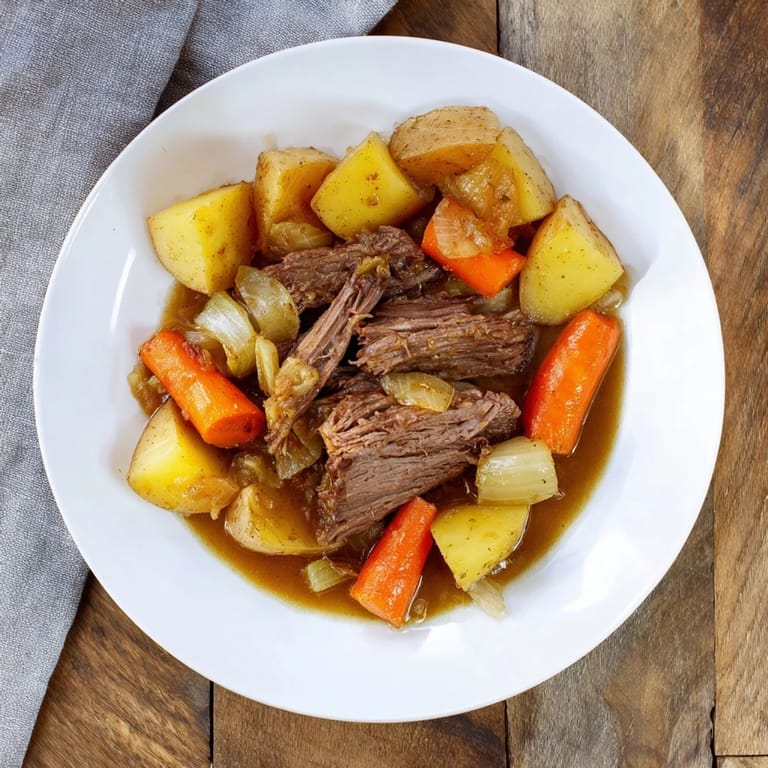
 The windows were fogged up from three hours of steady simmering, and I honestly couldn't tell you if it was raining outside or just the kitchen working hard. My grandmother's heavy Dutch oven was doing what it did best, turning a tough piece of meat into something that would fall apart at the mere suggestion of a fork. She always said pot roast was about patience, but really, it's about letting time do the heavy lifting while you go about your Sunday.
I made this for a snowy February dinner when friends canceled at the last minute, and suddenly it became just me and this massive pot of beef. Called my neighbor instead, we ate standing up in the kitchen with wine glasses and too much gravy on our plates. Sometimes the best dinners happen when you stop trying so hard.
Ingredients
- Chuck roast: This cut needs the long cook time to break down all that connective tissue into pure comfort
- Kosher salt and black pepper: Don't skimp here, this is your only chance to season the meat itself
- Olive oil: Use something with a neutral flavor since we're going for high heat
- Yukon Gold or Russet potatoes: Yukon Golds hold their shape better, but Russets will get creamier
- Large carrots: Cut them big so they don't turn to mush during the long braise
- Yellow onions: They'll sweeten as they cook, building depth in the gravy
- Garlic: Smashed releases more flavor than minced here
- Beef broth: The backbone of your sauce, so use something you'd actually drink
- Dry red wine: Optional, but it adds a complexity that broth alone can't achieve
- Tomato paste: Concentrated umami that deepens the entire dish
- Worcestershire sauce: That sneaky ingredient everyone asks about but can't quite place
- Dried thyme: Earthy and subtle, plays well with beef
- Bay leaves: Throw them in whole, fish them out later
- All-purpose flour or cornstarch: For turning those braising juices into actual gravy
Tired of Takeout? 🥡
Get 10 meals you can make faster than delivery arrives. Seriously.
One email. No spam. Unsubscribe anytime.
Instructions
- Get your oven ready:
- Preheat to 300°F, which is low and slow territory where magic happens
- Season the beef:
- Pat it completely dry with paper towels, then salt and pepper every surface like it owes you money
- Sear for flavor:
- Heat oil in your Dutch oven until it's smoking slightly, then brown the roast 4 to 5 minutes per side, listening for that satisfying sizzle
- Build the base:
- Cook onions and garlic just until they smell amazing and soften slightly
- Deglaze properly:
- Stir in tomato paste, then pour in wine while scraping up every browned bit from the bottom—that's where the flavor lives
- Assemble everything:
- Return beef to pot, add broth, Worcestershire, thyme, and bay leaves, then tuck potatoes and carrots around the edges
- The long wait:
- Cover tightly and braise for 3 to 3½ hours until the beef surrenders completely to your fork
- Make the gravy:
- Whisk flour with cold water until smooth, stir into the pot, and simmer until thickened
 Save to Pinterest
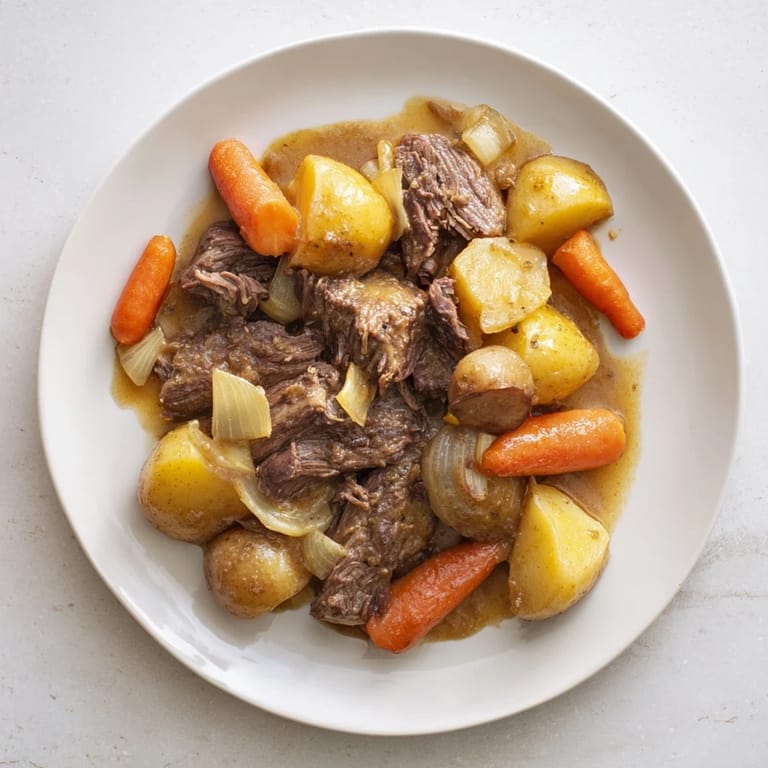
 My mother-in-law took one bite of this at our first holiday dinner together and actually stopped talking for a full minute. That's when I knew this recipe wasn't just about feeding people, it was about making them feel like they belonged at your table.
Choosing the Right Cut
Chuck roast is the gold standard for pot roast because it has plenty of marbling and connective tissue that transforms during long cooking. I've tried brisket, and while it works, it doesn't get quite as tender. Shoulder clod is another option if you can find it at your butcher counter.
Wine Selection
You don't need an expensive bottle, but you do need something decent enough to drink. Cabernet Sauvignon or Merlot work beautifully. If you don't cook with wine, just use more broth—the dish will still be incredible, just with a slightly different flavor profile.
Make Ahead Strategy
Pot roast actually improves with time, making it perfect for entertaining. Make it up to two days ahead, refrigerate in the cooking liquid, then gently reheat. The flavors meld together, and you can easily spoon off any solidified fat before reheating.
- Cool the pot completely before refrigerating to avoid temperature shock
- Reheat gently on the stovetop with a splash of water if needed
- The gravy will have thickened in the fridge, thin it out as you warm it
 Save to Pinterest
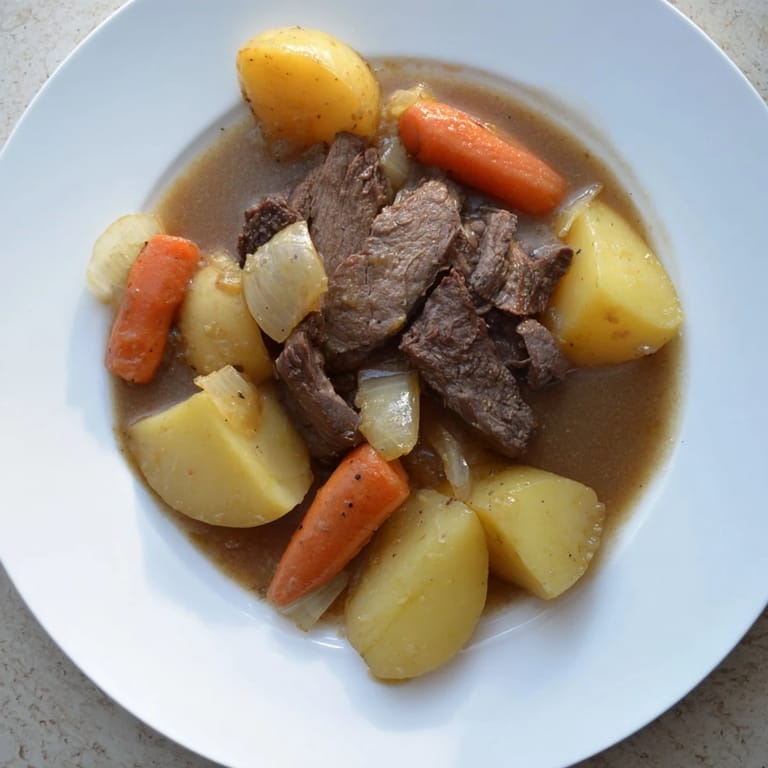
 There's something deeply satisfying about a dish that asks so little of you but gives so much in return. Maybe that's the real secret—sometimes the best cooking is just about showing up and waiting.
Recipe Questions & Answers
- → What cut of beef works best for pot roast?
Chuck roast is ideal for pot roast because it has plenty of marbling and connective tissue that breaks down during long, slow cooking. This results in incredibly tender, flavorful meat that falls apart easily.
- → Can I make this in a slow cooker?
Absolutely. After searing the beef and sautéing the aromatics, transfer everything to your slow cooker. Cook on low for 8-10 hours or on high for 4-6 hours until the beef is fork-tender.
- → What vegetables can I add to pot roast?
Beyond potatoes and carrots, try adding parsnips, celery root, turnips, or pearl onions. These hearty vegetables hold their shape well during long braising and absorb the delicious cooking liquid.
- → Why is my pot roast tough?
Pot roast needs time. If the meat is tough, it likely hasn't cooked long enough. Continue braising until a fork slides in and out easily. This typically takes 3-4 hours at 300°F.
- → Can I skip the wine in this dish?
Yes, simply replace the wine with additional beef broth. The dish will still be flavorful and delicious, though wine does add depth and complexity to the gravy.
- → How do I store and reheat leftovers?
Store cooled leftovers in an airtight container for up to 4 days. Reheat gently in a covered pot over low heat, adding a splash of broth if needed. The flavors often improve after a day or two.