 Save to Pinterest
 My neighbor knocked on my door one evening with a handful of ginger root, asking if I knew what to do with it. Twenty minutes later, the whole apartment smelled like a vibrant Asian market, and I realized how quickly a few crisp vegetables could transform into something that felt both comforting and exciting. That night taught me that the best meals don't need hours of planning—just good ingredients and a hot pan.
I made this for a friend who was trying to eat healthier, and she kept coming back for thirds. Watching her face light up when she realized it had no butter, no cream, and still tasted utterly satisfying was the moment I stopped thinking of stir-fries as boring diet food. Now it's what I reach for when I want to cook something that nourishes both body and spirit without fussing.
Ingredients
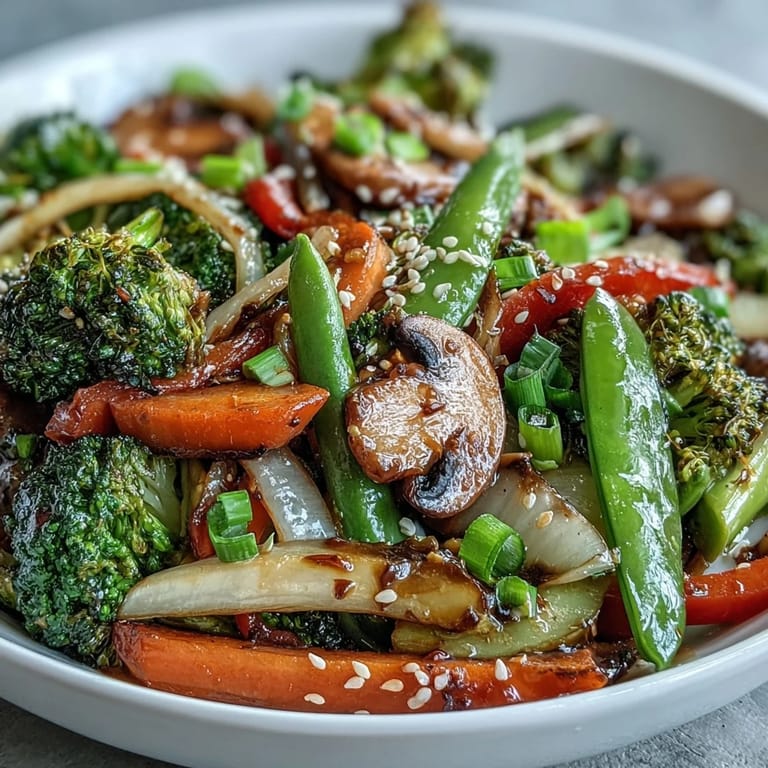
- Broccoli florets: Keep them roughly the same size so they cook evenly, and don't chop them too small or they'll disappear into the sauce.
- Sliced carrots: Cut them on a slight diagonal so they cook faster and look a little more elegant on the plate.
- Red bell pepper, sliced: The sweetness balances the heat from the ginger, and it adds a pop of color that makes people actually want to eat their vegetables.
- Snap peas, trimmed: These stay crisp if you add them near the end, which is the whole point of a good stir-fry.
- Yellow onion, thinly sliced: Thin slices mean they soften quickly without turning into mush.
- Sliced mushrooms: They soak up all the savory sauce and add an earthy depth that keeps things interesting.
- Fresh ginger, finely grated: This is where the magic happens—don't use ground ginger, it's completely different and honestly tastes stale by comparison.
- Garlic, minced: Three cloves is right for this amount, though I often sneak in an extra one because I'm that person.
- Soy sauce: Use tamari if you're avoiding gluten, and yes, the difference actually matters.
- Sesame oil: Just one tablespoon—it's potent, and too much makes everything taste like a bottle instead of a dish.
- Vegetable oil: This keeps the pan hot without competing with the other flavors.
- Rice vinegar: A splash of brightness that wakes up your taste buds and keeps the sauce from being one-dimensional.
- Maple syrup or honey: A tiny bit of sweetness to balance all the salt and vinegar, which is balance in a spoon.
- Red pepper flakes: Completely optional, but if you like heat, this is your moment.
- Green onions, sliced: Save these for the very end so they stay fresh and add a mild onion bite.
- Toasted sesame seeds: These add a nutty crunch that makes the whole dish feel finished and intentional.
Tired of Takeout? 🥡
Get 10 meals you can make faster than delivery arrives. Seriously.
One email. No spam. Unsubscribe anytime.
Instructions
- Make your sauce first:
- Whisk together soy sauce, rice vinegar, maple syrup, and red pepper flakes in a small bowl and set it aside. Having everything ready before the pan gets hot is the difference between controlled cooking and chaos.
- Heat your oils together:
- Pour vegetable oil and sesame oil into a large skillet or wok over medium-high heat. You want the pan hot enough that a piece of ginger sizzles immediately when it hits the surface.
- Bloom the aromatics:
- Add minced ginger and garlic, stirring constantly for about 30 seconds until the kitchen fills with that incredible fragrant smell. This step is short but essential—you're waking up those flavors, not browning them.
- Start with the slower vegetables:
- Toss in onion, carrots, and broccoli, stirring constantly for 2 to 3 minutes. These take a bit longer to soften, so they go in first.
- Add the quick vegetables:
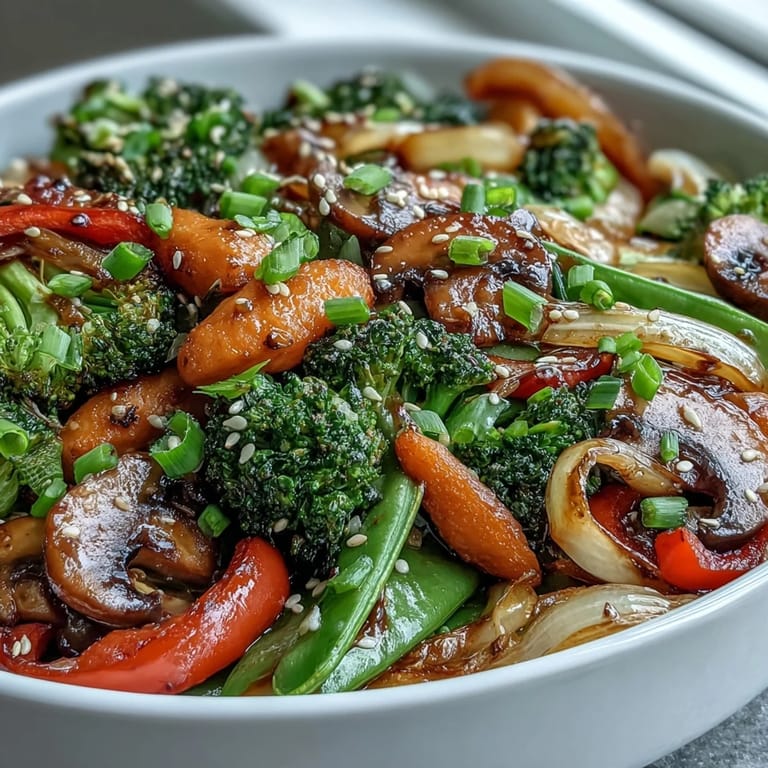
- Introduce bell pepper, snap peas, and mushrooms and keep stirring for another 3 to 4 minutes until everything is crisp-tender and bright colored. If a vegetable looks completely soft, you've gone too far.
- Bring it all together with sauce:
- Pour in that sauce you made earlier and toss everything vigorously for 1 to 2 minutes so every piece gets coated and the sauce reduces slightly. The whole pan should smell intoxicating at this point.
- Finish and serve:
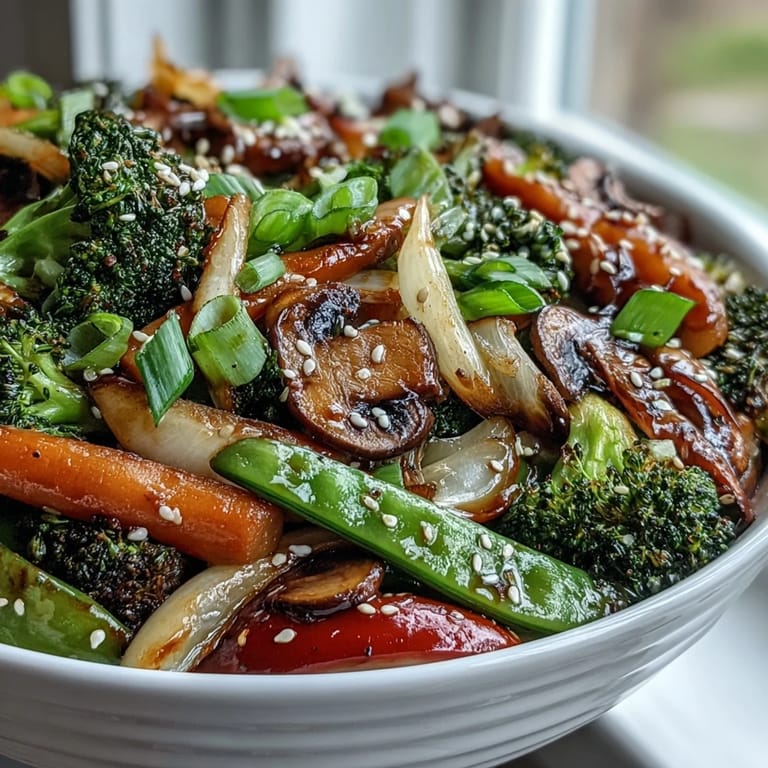
- Remove from heat, scatter green onions and toasted sesame seeds across the top, and serve immediately over rice or noodles. The timing here matters because you want those green onions to stay fresh and the seeds to not get soggy.
 Save to Pinterest
 One afternoon, my child asked what smelled so good while I was cooking this, and I realized it was the first time they'd actually asked about something I was making instead of just waiting to eat. That simple question reminded me that food is as much about the experience of creating it as it is about eating it.
The Secret to Staying Crisp
The difference between a stir-fry that's vibrant and one that's mushy comes down to temperature and timing. Your pan needs to be hot enough that the vegetables hit it and immediately start to sear slightly on the outside while staying tender inside. This is why a wok works so beautifully—the shape helps you keep everything moving and nothing sits still long enough to overcook.
Building Flavor Layers
Ginger doesn't just add heat, it adds complexity and brightness that makes your brain wake up. By blooming it in oil at the start, you're releasing those volatile oils into the fat, which then coats every vegetable you add afterward. This is why the dish tastes so different from just tossing raw ginger into cooked vegetables—the heat and fat transform it into something more sophisticated.
Serving and Storage Ideas
Serve this over jasmine rice for something delicate, brown rice for something earthy, or noodles if you want it to feel more substantial. You can also eat it straight from the wok if you're standing over the stove in comfortable clothes on a Tuesday evening, which is its own kind of satisfying.
- Add baked tofu or tempeh on the side if you want extra protein and something that soaks up more sauce.
- Leftovers taste great cold the next day straight from the fridge, though they'll be softer than fresh—reheat them gently in a pan if you want to restore some crispness.
- Make the sauce the night before if you're meal-prepping, but cut vegetables just before cooking for the best texture.
 Save to Pinterest
 This dish reminds me that the best meals are the ones you can make with confidence and creativity, knowing the basics will always come together. Enjoy it, improvise with what you have, and don't worry about perfection.
Recipe Questions & Answers
- → What vegetables work best for stir-frying?
Broccoli, carrots, bell peppers, snap peas, and mushrooms are excellent choices. They maintain their texture during high-heat cooking and absorb the savory sauce beautifully while staying crisp-tender.
- → How do I prevent vegetables from becoming soggy?
Keep the heat at medium-high and avoid overcrowding the pan. Cook vegetables in stages if needed, starting with harder ones like carrots and broccoli, then adding softer vegetables like bell peppers and snap peas.
- → Can I add protein to this dish?
Absolutely. Cubed tofu, tempeh, or edamame work wonderfully for plant-based protein. Simply add them during the last few minutes of cooking to heat through and coat with the sauce.
- → What should I serve with these vegetables?
Steamed jasmine rice, brown rice, or noodles make perfect accompaniments. The neutral base balances the bold ginger-soy flavors while soaking up the delicious sauce.
- → Is this dish gluten-free?
Yes, simply substitute tamari for regular soy sauce. All other ingredients are naturally gluten-free, making it easy to adapt for those with dietary restrictions.
- → How long do leftovers stay fresh?
Store in an airtight container in the refrigerator for up to 3-4 days. Reheat gently in a skillet or microwave, though the vegetables will be softer than when freshly made.