 Save to Pinterest
 My neighbor Maria showed up at my door one sweltering July afternoon with a handful of tomatoes still warm from her garden and insisted I make this salad for that night's dinner party. I'd never thought of Greek salad as anything special until she described how the briny olives talk back to the creamy feta, how the vinegar wakes up your whole mouth. That evening, watching people actually pause mid-conversation to savor a bite, I understood it wasn't about complexity—it was about letting each ingredient shine without apology.
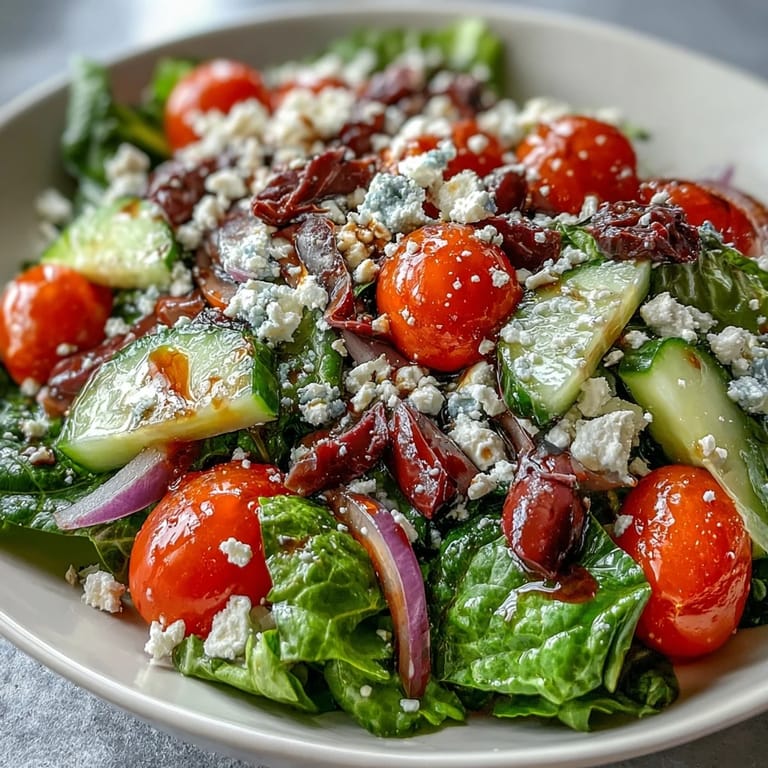
I made this for a potluck once and brought it in a clear glass bowl, which turned out to be the best decision I didn't intentionally make. Everyone could see those jewel-toned tomatoes and olives nestled against the white feta before they even tasted it. By the time I left, the bowl was completely empty and someone had asked for the recipe three times.
Ingredients
- Romaine lettuce, 6 cups chopped: The sturdy base that holds up to the vinaigrette without getting sad and soggy if you dress it a few minutes ahead.
- Cherry tomatoes, 1 cup halved: Their sweetness balances the salt and vinegar beautifully, and halving them instead of quartering keeps everything in proportion.
- Cucumber, 1 cup sliced: Choose ones that feel firm and cool to the touch, and don't peel them unless the skin looks tough—that's where the flavor hides.
- Red onion, 1/2 small thinly sliced: The bite here is intentional, so don't skip it or reduce it out of caution; it's what keeps this from tasting like every other salad.
- Feta cheese, 3/4 cup crumbled: Buy a block and crumble it yourself if you can—the pre-crumbled stuff is sometimes too dry and dusty to add the creamy richness this salad needs.
- Kalamata olives, 1/2 cup pitted and halved: Pit them fresh if possible because the flavor is noticeably brighter, and those wrinkled purple-black gems deserve better than a can if you have time.
- Extra-virgin olive oil, 1/4 cup: This is not the place to go budget; a good oil makes the entire dressing shine and tastes peppery on the back of your throat in the best way.
- Red wine vinegar, 2 tbsp: Measure it out—this is one of those ingredients where eyeballing leads to either too much pucker or a dressing that tastes like nothing.
- Dried oregano, 1 tsp: Crush it between your palms right before adding it to release the oils and remind yourself why you love Mediterranean cooking.
- Garlic, 1 clove minced: Use fresh garlic, not that jarred stuff, and mince it fine so it distributes evenly without creating pockets of raw intensity.
- Dijon mustard, 1/2 tsp: This acts as an emulsifier to help the oil and vinegar get along, and it adds a subtle sophistication you won't be able to pinpoint but will notice is missing if you forget it.
- Salt and black pepper, 1/4 tsp and 1/8 tsp: Taste as you go because feta is already salty, and you might need less than you think.
Tired of Takeout? 🥡
Get 10 meals you can make faster than delivery arrives. Seriously.
One email. No spam. Unsubscribe anytime.
Instructions
- Build your vegetable base:
- Chop the romaine into bite-sized pieces and scatter it across a large bowl like you're creating a canvas. Halve those tomatoes, slice the cucumber into thin coins, and thinly slice your red onion so thin you can almost see through it.
- Layer in the salty elements:
- Sprinkle the crumbled feta and halved olives over the greens without tossing yet—this way you can see what you're working with and adjust if something feels sparse. The feta chunks should be visible little rewards between bites, not dissolved throughout.
- Create the vinaigrette:
- In a small bowl or a jar with a tight lid, combine your oil, vinegar, oregano, minced garlic, mustard, salt, and pepper. If you're using a jar, screw the lid on tight and shake it like you mean it until everything looks emulsified and creamy rather than separated—listen for the change in sound.
- Dress and toss:
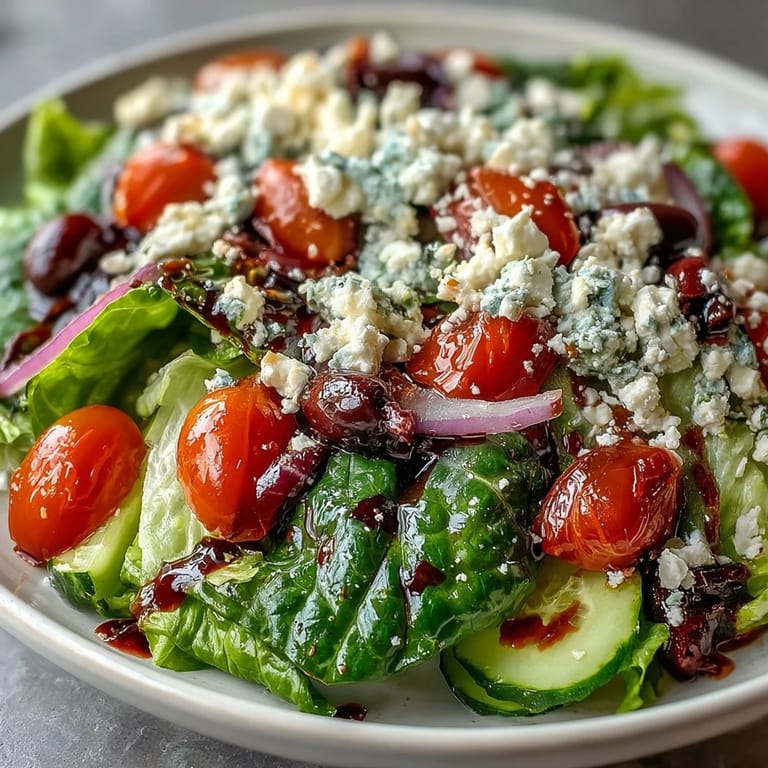
- Drizzle the vinaigrette over everything just before people are about to eat, then toss gently with your hands or two spoons so nothing gets bruised. You want the lettuce coated but not drowning, and you want to do this moment right before serving so the textures stay distinct.
- Serve with intention:
- Transfer to individual bowls or plates if you have time, and maybe grind a tiny bit of fresh pepper over top as a final touch that costs nothing but looks intentional.
 Save to Pinterest
 There's something about serving a Greek salad that makes people slow down. A friend who usually rushes through meals actually put her fork down one evening and said it tasted like a memory, which is exactly what happened—we transported ourselves somewhere sunny for twenty minutes without leaving my kitchen.
The Vinaigrette Is Everything
Don't even think about using bottled dressing for this one. The homemade vinaigrette takes maybe three minutes to whisk together, and the difference is the entire reason people ask for your recipe instead of just nodding politely. The emulsified dressing clings to the vegetables instead of pooling at the bottom, and that minced garlic and oregano make you taste the Mediterranean instead of just tasting salad.
Why This Works as a Complete Meal
Greek salad isn't just a side dish pretending to be substantial—the combination of protein from the feta, healthy fats from the olives and oil, and fiber from the vegetables actually keeps you satisfied. I've served this as the main course to skeptics who left feeling genuinely nourished instead of like they'd eaten air and good intentions. When you want something that feels indulgent but doesn't leave you sluggish, this is your answer.
Make It Your Own Without Losing the Soul
The beauty of Greek salad is that it welcomes additions without becoming something else entirely. I've added sliced bell peppers when I had them on hand, thrown in fresh herbs like dill or parsley, and even topped it with grilled chicken or shrimp when I wanted more protein. The foundation stays strong enough that these additions feel like enhancements rather than desperation moves.
- Fresh dill or parsley scattered on top adds brightness without competing with the oregano in the vinaigrette.
- If you want heartier, serve alongside warm pita bread or over grilled chicken, and suddenly everyone calls it dinner.
- Vegan feta swaps in seamlessly if you're cooking for someone avoiding dairy, and the salad loses nothing in the exchange.
 Save to Pinterest
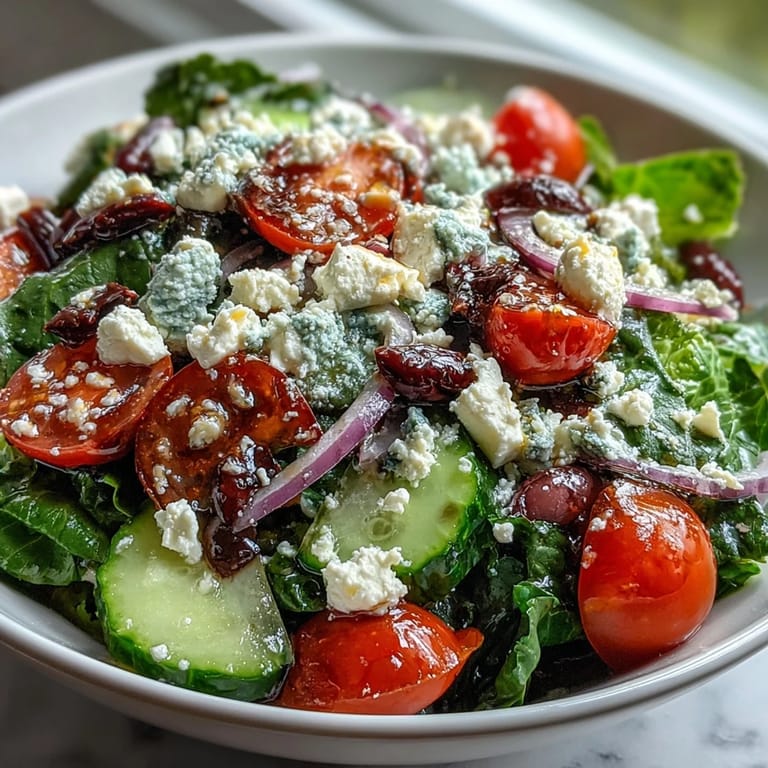
 This salad has shown up at my table in every season, from garden-heavy summer to winter when I'm craving something bright and alive. It's proof that the simplest recipes, the ones without tricks or shortcuts, somehow become the ones people remember.
Recipe Questions & Answers
- → Can I make Greek salad ahead of time?
Yes, you can prepare the vegetables and vinaigrette separately up to a day in advance. Store chopped vegetables in airtight containers and keep the dressing in a sealed jar. Toss everything together just before serving to maintain crisp texture and prevent sogginess.
- → What vegetables work best in this Mediterranean bowl?
Romaine lettuce provides the perfect crunchy base, while cherry tomatoes, cucumber, and red onion offer classic Mediterranean flavors. You can also add bell peppers, radishes, or avocado for extra variety and nutrition.
- → How do I make the vinaigrette emulsify properly?
Whisk the olive oil and vinegar vigorously while slowly pouring the oil into the vinegar mixture. The Dijon mustard acts as an emulsifier, helping the dressing blend smoothly. Alternatively, shake all ingredients in a sealed jar for 30 seconds until well combined.
- → Is this suitable for meal prep?
Absolutely! Portion the vegetables and feta into separate containers, and store the vinaigrette in small jars. Keep everything refrigerated for up to 4 days. The flavors actually improve as vegetables marinate slightly in the dressing.
- → What can I substitute for feta cheese?
Try vegan feta for a dairy-free option, or use crumbled goat cheese for a milder tang. Ricotta salata or halloumi cubes work well too. For a completely different twist, avocado adds creaminess without dairy.
- → How do I prevent the salad from getting watery?
Dry your vegetables thoroughly after washing, especially the lettuce and cucumbers. Pat them with paper towels or use a salad spinner. Halved cherry tomatoes hold their juice better than sliced larger tomatoes. Dress just before serving.