 Save to Pinterest
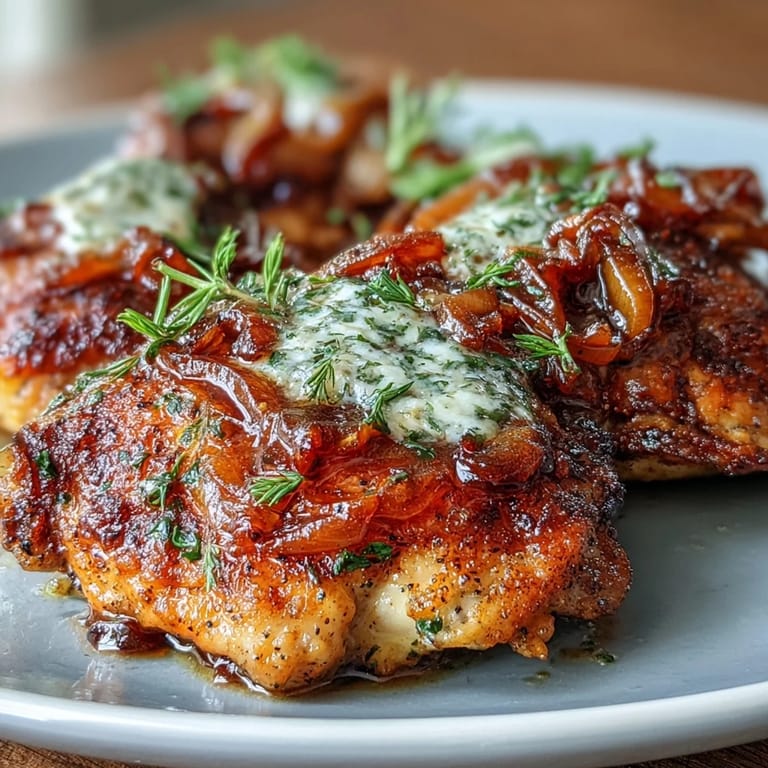
 My grandmother's kitchen had a particular smell on Sunday afternoons—onions caramelizing in cast iron, chicken skin crisping to golden perfection, the kind of aroma that pulls you in before you even realize what's cooking. Years later, I found myself standing in my own kitchen, trying to recreate that exact feeling, and what emerged was this smothered chicken with onion gravy, a dish so fundamentally comforting it feels like a warm hug on a plate. The beauty of it is how simple the magic is: good chicken, patient cooking, and onions that transform into liquid gold under gentle heat. There's no pretense here, just honest Southern cooking that reminds you why food matters.
I served this to my neighbor Marcus on a Thursday when he'd helped me move a dresser, and watching his face when he took that first bite—gravy clinging to the chicken, steam rising—I understood why my grandmother made this so often. Food that asks nothing but gives everything back, that's what this is. He came back three times with his plate, and we barely talked, just ate and smiled at each other like that was enough.
Ingredients
- Bone-in, skin-on chicken thighs and drumsticks: The bones keep things juicy while the skin crisps up beautifully, and honestly, thighs are more forgiving than breasts because they're already flavorful.
- All-purpose flour: Works double duty here—keeps the chicken crispy and thickens the gravy, so don't skip it.
- Vegetable oil: Use something neutral that can handle the heat without smoking or overpowering the chicken.
- Large yellow onions: They're sweeter than other varieties and caramelize into something almost jam-like when given time and patience.
- Low-sodium chicken broth: Gives you control over the salt, and you'll taste the difference when you use decent broth instead of the super salty stuff.
- Unsalted butter: Added at the end, it smooths out the gravy and makes it taste less thin, so please don't skip it.
- Paprika, garlic powder, onion powder, dried thyme: These aren't just flavor—they're the backbone that makes this taste like Sunday dinner, so measure them out instead of guessing.
Tired of Takeout? 🥡
Get 10 meals you can make faster than delivery arrives. Seriously.
One email. No spam. Unsubscribe anytime.
Instructions
- Pat and season the chicken:
- Dry chicken pieces absorb seasoning better and crisp faster, so don't rush this step—use paper towels and really get them dry. Sprinkle the salt, pepper, paprika, garlic powder, and onion powder all over, getting into the crevices where the meat meets the bone.
- Dredge in flour:
- Mix your flour with salt and pepper in a shallow bowl, then coat each piece, shaking off the excess so you don't get a flour shell. Keep that leftover flour nearby because you'll use it for the gravy and it's already seasoned.
- Fry the chicken:
- Heat the oil until it shimmers but doesn't smoke, then add chicken skin-side down—you'll hear it sizzle, and that's exactly right. Six to eight minutes on the first side until that skin turns deep golden, then flip and give the other side the same treatment, but remember this isn't fully cooking yet, just building flavor and color.
- Cook the onions:
- After removing the chicken, pour off most of the oil but leave about two tablespoons behind because that's where all the flavor lives. Add your sliced onions and let them sit undisturbed for a minute before stirring—this helps them caramelize instead of just soften—then stir every couple of minutes until they're golden and falling apart, about 8 to 10 minutes total.
- Make the roux:
- Sprinkle that reserved flour over the onions and stir constantly for just a minute or two until it loses its raw flour smell and turns a light golden brown. This step is the bridge between the onions and the gravy, and it happens fast so don't walk away.
- Build the gravy:
- Whisk in the chicken broth slowly, scraping up all those brown bits from the bottom of the skillet because that's pure flavor. Add your thyme, paprika, salt, pepper, and butter, then let it bubble away gently until it thickens enough to coat a spoon, maybe 2 or 3 minutes.
- Finish cooking:
- Nestle the chicken back into that gravy, spoon some over the top, cover the skillet, and turn the heat down low—this is where the magic really happens. Let it simmer for 25 to 30 minutes until the chicken is tender enough to pull apart with a spoon and the internal temperature hits 165°F, and your kitchen will smell like a dream.
- Serve:
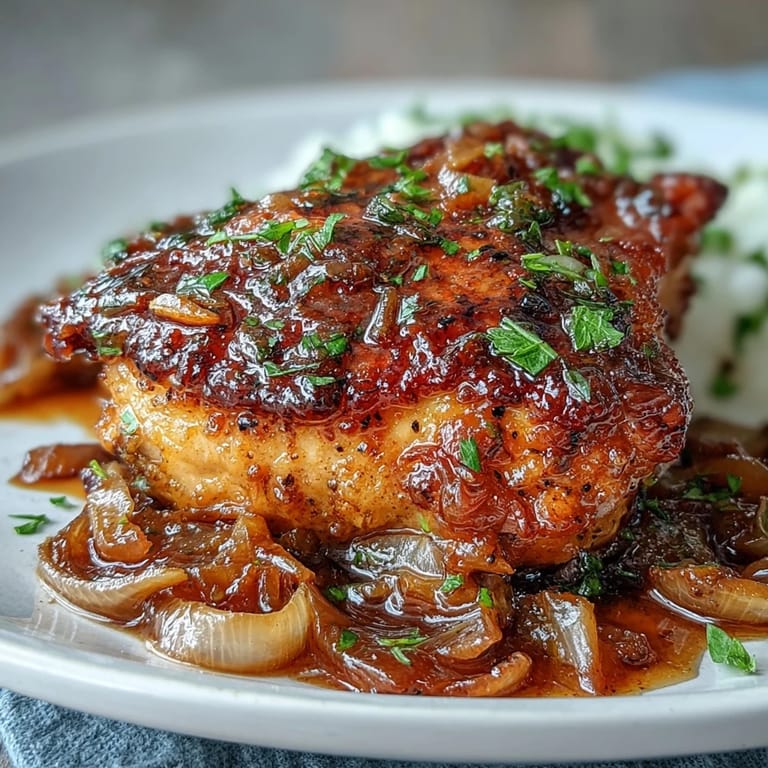
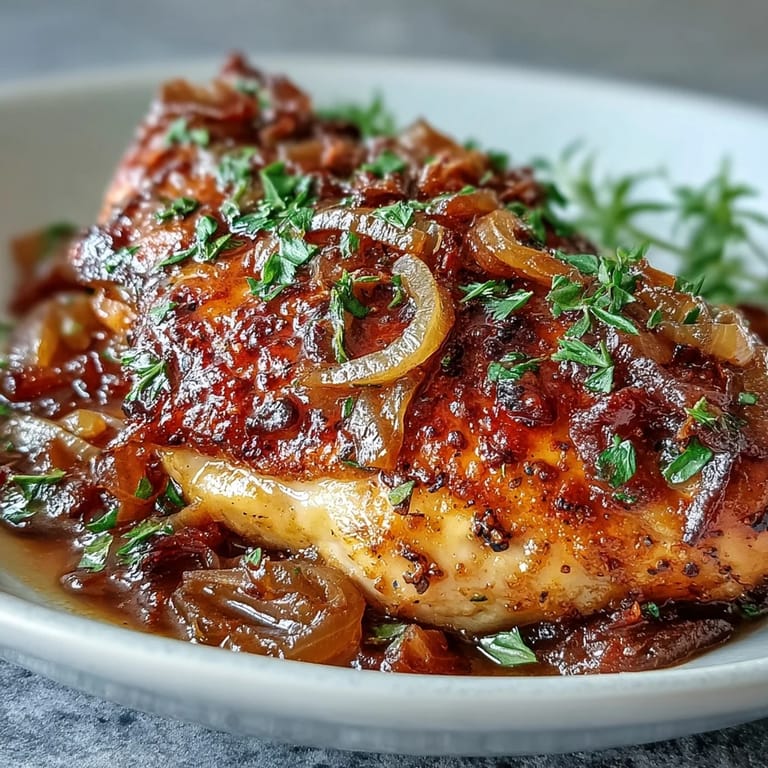
- Spoon everything onto plates or a platter—the chicken, the onions, and plenty of that silky gravy.
 Save to Pinterest
 The first time my daughter asked for seconds, then thirds, without complaining or picking at it, I knew I'd nailed something that mattered. She was eight, maybe nine, and usually food was just fuel between soccer practice and homework, but this—this made her pause.
The Secret of Caramelized Onions
Most people rush this part, thinking onions are just onions, but when you give them time and a touch of patience, something shifts. They start out sharp and crisp, then around five minutes in they turn soft and sweet, and if you keep going, they caramelize into something almost dessert-like, with deep golden layers and a complexity that makes the whole dish taste less like dinner and more like someone really cared. I learned this the hard way by overcooking them once—they went from golden to burnt in what felt like seconds—so now I stir them regularly, respect the process, and sometimes add a pinch of sugar if they're being stubborn about browning.
Why Bone-In Chicken Matters Here
Boneless chicken cooks faster and tastes like very little, whereas bone-in chicken stays juicy and absorbs all the flavors swimming around in that gravy. The bones also add something subtle to the gravy itself, a richness that you notice even if you don't consciously think about it. If you absolutely must use boneless, skinless chicken, just cut 10 minutes off the simmering time and cover the skillet so it doesn't dry out.
Variations and Sides That Work
This dish is flexible enough to handle what you have in the pantry, and that's part of why it's survived in kitchens for generations. Serve it over mashed potatoes, rice, or crusty bread—anything that can soak up that gravy without apology. If you want heat, add a pinch of cayenne pepper to the flour mixture or a dash of hot sauce to the finished gravy. Some people swear by homemade chicken stock for a richer flavor, and they're not wrong, but a good low-sodium store-bought broth will absolutely work.
 Save to Pinterest
 This recipe is permission to slow down and cook something that nourishes people in more ways than one. Make it for someone you care about, and watch what happens.
Recipe Questions & Answers
- → What type of chicken is best for this dish?
Using bone-in, skin-on chicken thighs and drumsticks helps keep the meat juicy and flavorful during slow cooking.
- → How do you achieve a rich onion gravy?
Slowly caramelizing thinly sliced onions and gradually whisking in broth with flour creates a thick, savory gravy that coats the chicken beautifully.
- → Can I adjust the seasoning for more heat?
Adding a pinch of cayenne pepper to the flour mixture gives the dish a gentle kick without overpowering the savory flavor.
- → What side dishes pair well with this meal?
Mashed potatoes, rice, or collard greens complement the rich chicken and gravy, balancing the hearty flavors.
- → How do I ensure chicken is fully cooked through?
Simmer the chicken covered for 25–30 minutes until it reaches an internal temperature of 165°F (74°C) for tenderness and safety.