 Save to Pinterest
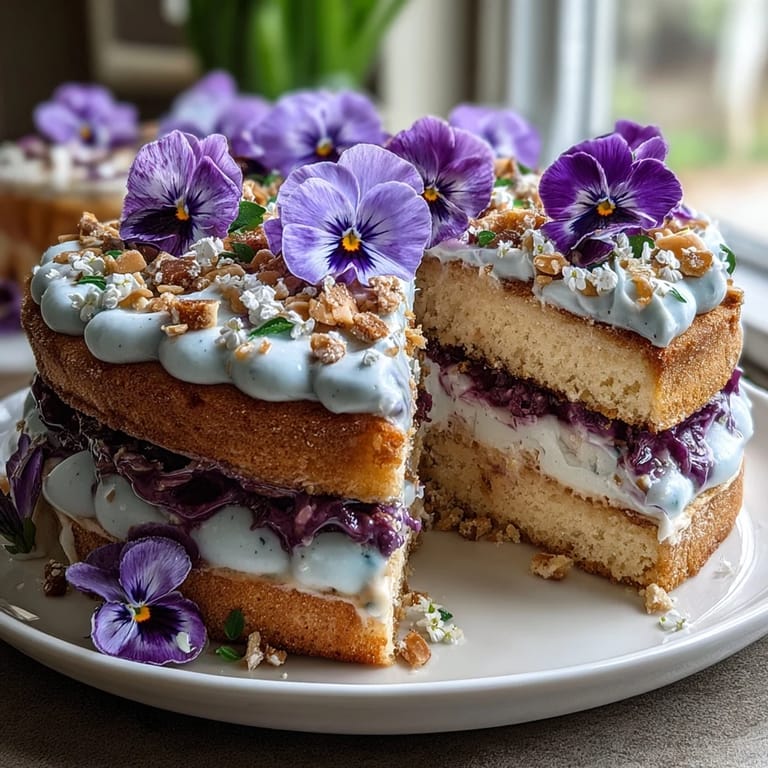
 My neighbor showed up at my door one April morning with a small envelope of pressed violets she'd been saving all winter, and suddenly I understood why people get excited about spring cakes. There's something about layering something so delicate and light that makes you want to slow down, to treat the whole process like an act of care rather than just baking. This vanilla cake became my answer to her gift—a soft, tender base that wouldn't compete with the flowers, just cradle them gently on its surface.
I made this for my daughter's garden club gathering last spring, and watching people's faces when they saw the flowers pressed into the frosting—that moment of pure joy before they even tasted it—that's when I knew this recipe was worth keeping around. One guest asked if it was too pretty to eat, and someone else immediately cut a slice anyway, proving that beauty and taste don't have to compete.
Ingredients
- All-purpose flour (2 1/2 cups): The foundation of a tender crumb; sifting it with the leavening agents ensures even rising and prevents dense pockets.
- Baking powder (2 1/2 tsp): This is what gives the cake its gentle lift and cloud-like texture that won't overwhelm the delicate toppings.
- Salt (1/2 tsp): A small amount amplifies the vanilla and prevents the cake from tasting flat or one-dimensional.
- Unsalted butter (1 cup), softened: Room temperature butter creams into sugar more easily, trapping air that creates a lighter crumb.
- Granulated sugar (1 3/4 cups): Beyond sweetness, sugar helps bind moisture into the cake and keeps it tender for days.
- Eggs (4 large), at room temperature: Warm eggs emulsify more smoothly with the butter, creating a more cohesive batter and better texture.
- Pure vanilla extract (1 tbsp): Real vanilla matters here because the cake itself is simple; there's nowhere for inferior extract to hide.
- Whole milk (1 cup), at room temperature: Cold milk can seize the warm batter, so let it sit out beforehand for a smoother blend.
- Heavy whipping cream (2 cups), cold: The colder the cream and bowl, the faster and more stable your whipped frosting becomes.
- Powdered sugar (1/2 cup): Unlike granulated sugar, powdered sugar dissolves instantly into cream without graininess.
- Pressed edible flowers (1/2–1 cup): They must be organically grown and unsprayed; pressing them between parchment and heavy books for at least 24 hours beforehand ensures they're truly dry and won't wilt on the frosting.
- Fresh mint leaves (optional): A whisper of green adds contrast and freshness if you want to break up the flower pattern.
Tired of Takeout? 🥡
Get 10 meals you can make faster than delivery arrives. Seriously.
One email. No spam. Unsubscribe anytime.
Instructions
- Get your oven and pans ready:
- Preheat to 350°F and grease two 8-inch round pans, then line the bottoms with parchment paper so the cakes slip out cleanly without sticking. This small step saves so much frustration later.
- Sift the dry team:
- Combine flour, baking powder, and salt in a medium bowl and sift them together; this aerates the flour and distributes the leavening evenly. Set aside and let it rest while you work on the wet ingredients.
- Cream butter and sugar into clouds:
- Beat the softened butter with sugar for 3–4 minutes until it's pale, fluffy, and noticeably lighter; you should see the mixture transform, which means you're trapping air for a tender cake. Stop and scrape the bowl often so everything creams evenly.
- Add eggs one at a time, gently:
- Each egg should be fully incorporated before you add the next; this takes patience but creates a smooth, emulsified base. Stir in the vanilla after the last egg.
- Alternate flour and milk without overmixing:
- Add one-third of the flour mixture, then half the milk, then another third of flour, then the rest of milk, and finally the last of flour, mixing just until combined each time. Overmixing develops gluten, which makes the cake tough and dense, so stop as soon as you don't see streaks of flour.
- Fill and level the pans:
- Divide the batter evenly between both prepared pans and smooth the tops with a spatula; this helps them bake at the same rate.
- Bake until just set:
- Bake for 30–35 minutes until a toothpick inserted in the center comes out clean or with just a few moist crumbs. The cake should smell warm and vanilla-forward, and the edges should pull slightly from the pan.
- Cool with patience:
- Let the cakes rest in the pans for 10 minutes so they firm up, then turn them out onto wire racks to cool completely. This takes at least an hour, but rushing this step leads to crumbling and broken layers.
- Whip the frosting:
- In a chilled bowl, beat cold heavy cream with powdered sugar and vanilla until stiff peaks form; this should take 2–3 minutes. Stop beating before it turns grainy, which means you've overworked it into butter.
- Assemble with care:
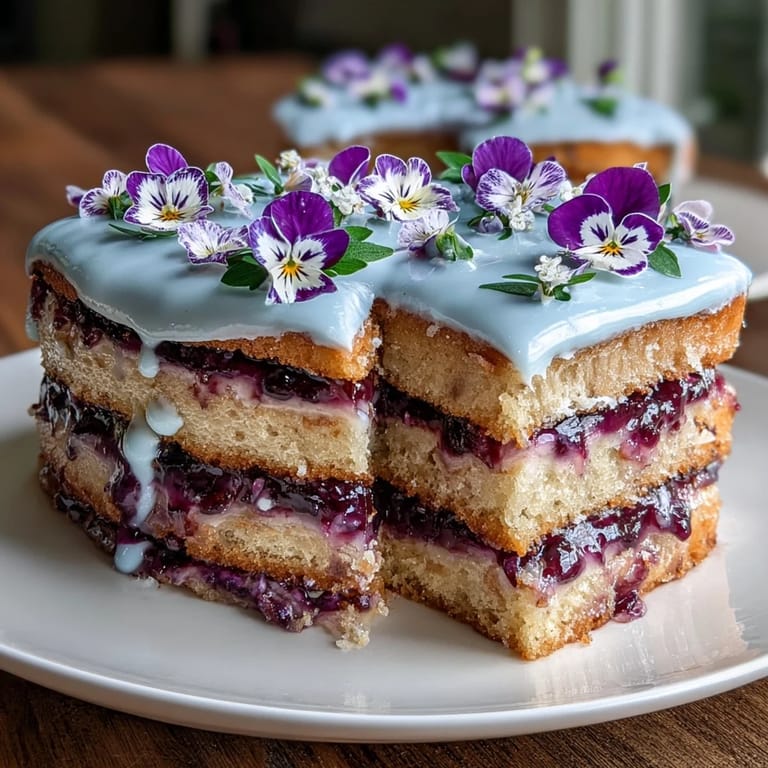
- Place one completely cooled cake layer on a serving plate, spread a generous layer of whipped cream on top, then set the second layer on top and frost the sides and top with remaining cream. A chill offset spatula helps smooth and swirl it if you want a more finished look, but rustic also looks beautiful.
- Press the flowers on:
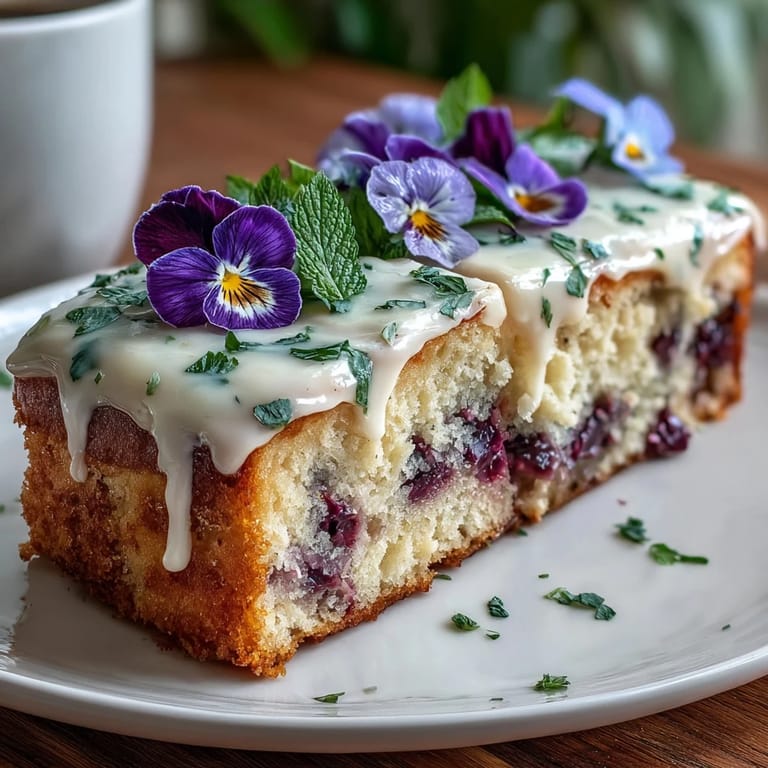
- Gently but firmly press the pressed edible flowers onto the frosting, arranging them in a pattern that feels natural and stops you from overthinking it. Add mint leaves if you'd like a pop of green, then chill the whole cake for at least 30 minutes to set everything.
 Save to Pinterest
 There's a kind of quiet pride in serving a cake that looks like you spent hours on it when really you just understood the ingredients and trusted the process. My sister ate a slice and asked if I'd started a bakery, which made me laugh, because the secret was just listening to what the recipe was trying to tell me.
Why This Cake Celebrates Spring
Vanilla cake feels right for spring because it's not heavy or dark or meant to impress through richness; it's a canvas, a support system for something else to shine. The whipped cream frosting is light enough that it doesn't weigh you down even after a full meal, and the pressed flowers are the whole point—they're what makes this cake feel like you've captured something fleeting and made it permanent on a plate.
Sourcing and Pressing Your Flowers
The flowers are not optional decoration; they're the soul of this cake, so take the time to find organically grown ones or grow them yourself if you have even a tiny corner of a garden. I've learned the hard way that conventionally grown flowers can carry pesticides you definitely don't want to eat, and pressing them between parchment and heavy books for at least 24 hours beforehand ensures they're completely dry and won't wilt or turn to mush when they hit the frosting.
Storage, Serving, and Small Moments
This cake is best served the same day you assemble it, though you can bake and freeze the layers up to a week ahead if you want to spread the work across days. Keep the finished cake in the refrigerator until you're ready to serve, and if you're transporting it, a cake box with a flat base is your friend because whipped cream frosting doesn't travel well on open plates. There's something about slicing into a cake where the flowers are right there on the surface, where you can see them before they ever touch your tongue, that makes everyone at the table pause and notice what they're about to eat—and in a world where eating happens quickly, that pause is a small gift.
- If your kitchen is warm, work quickly with the frosting and keep everything chilled; a warm room is the enemy of whipped cream's stability.
- You can add 1–2 teaspoons of lemon zest to the cake batter for a citrusy note that feels fresh and pairs beautifully with the flowers.
- Pair slices with sparkling wine, floral tea, or even just coffee so the cake becomes part of a moment rather than just dessert.
 Save to Pinterest
 This cake lives in the space between simple and special, and once you've made it once, you'll find yourself reaching for it whenever you want to feel a little bit like spring or give someone a reason to slow down and look closely at what's in front of them.
Recipe Questions & Answers
- → How do I press edible flowers for decoration?
Place fresh, organically grown edible flowers between parchment paper and press under heavy books for at least 24 hours to dry and flatten them before use.
- → Can I prepare the cake layers in advance?
Yes, bake and cool the cake layers fully, then wrap and refrigerate. Assemble and frost just before serving for best texture.
- → What is the best way to achieve stiff peaks in the whipped cream?
Use very cold heavy cream and a chilled bowl, then beat on medium-high speed until the cream holds firm, defined peaks without overwhipping.
- → How can I add a citrus twist to the cake?
Mix 1–2 teaspoons of lemon zest into the cake batter to introduce a fresh, bright flavor that complements the floral notes.
- → What are good beverage pairings for this cake?
Pair with a light sparkling wine or a delicate floral tea to enhance the fresh and elegant flavors of the cake.