 Save to Pinterest
 When spring finally sweeps in with its bright mornings and gentle breezes, I always notice the green markets bursting with asparagus and peas. One rainy weekend, trying to conjure some sunshine indoors, I whipped up this frittata as birds squabbled outside my window. There's something calming about whisking eggs while the kitchen fills with the scent of fresh chives and blooming dill. For me, the act of layering silky goat cheese onto crisp vegetables feels like a whispered promise: spring is here, and the meal ahead will be vibrant and satisfying.
Last April, I made this frittata for brunch when my sister stopped by unexpectedly, her arms full of garden herbs and stories. We chopped and laughed, each step weaving spring into our meal as the skillet hissed and the room smelled of onions and butter. Watching her sneak pinches of goat cheese to taste, I realized how food becomes a backdrop to moments big and small.
Ingredients
- Asparagus: Choose slender stalks for a tender bite, and trim away woody ends before slicing.
- Fresh or frozen peas: Use fresh if you can – they pop with sweetness – but frozen peas work in a pinch and don’t need defrosting.
- Baby spinach: Roughly chop to help it wilt quickly and distribute flavor evenly.
- Spring onions: Thin slices add just the right amount of mellow zing and color.
- Eggs: Crack them into a wide bowl and whisk thoroughly for a fluffy texture.
- Whole milk or cream: Cream gives extra richness, but milk keeps it lighter; both help bind the frittata.
- Goat cheese: Crumble gently for creamy pockets that melt into each slice.
- Unsalted butter: Melt fully before sautéing vegetables to prevent sticking and create flavor depth.
- Fresh chives and dill or parsley: Finely chopped so every bite offers a hit of herby freshness.
- Salt and freshly ground black pepper: Season as you go – the vegetables need a little salt to shine.
Tired of Takeout? 🥡
Get 10 meals you can make faster than delivery arrives. Seriously.
One email. No spam. Unsubscribe anytime.
Instructions
- Get the oven ready:
- Set your oven to 375°F (190°C) and allow it to heat while you prepare everything else.
- Sauté the vegetables:
- Melt butter in your skillet over medium, then toss in the asparagus; listen for that sizzle and add peas and spring onions after two minutes, stirring until they're just tender and bright. Sprinkle in spinach last, and stir until it wilts down and turns emerald.
- Prep the egg mixture:
- In a large bowl, whisk the eggs with milk, chives, dill or parsley, salt and pepper – it should look pale and frothy after a minute of steady whisking.
- Combine eggs and veggies:
- Pour the egg blend smoothly over sautéed vegetables in the skillet, gently shaking to distribute evenly; let it cook undisturbed for three to four minutes, until you see the edges start to set but the center still jiggles.
- Add goat cheese:
- Scatter the crumbled goat cheese all across the top, aiming for creamy bites in every slice.
- Oven time:
- Move the skillet into the oven and bake for ten to twelve minutes, watching for a puffed, just-set center.
- Let it rest and slice:
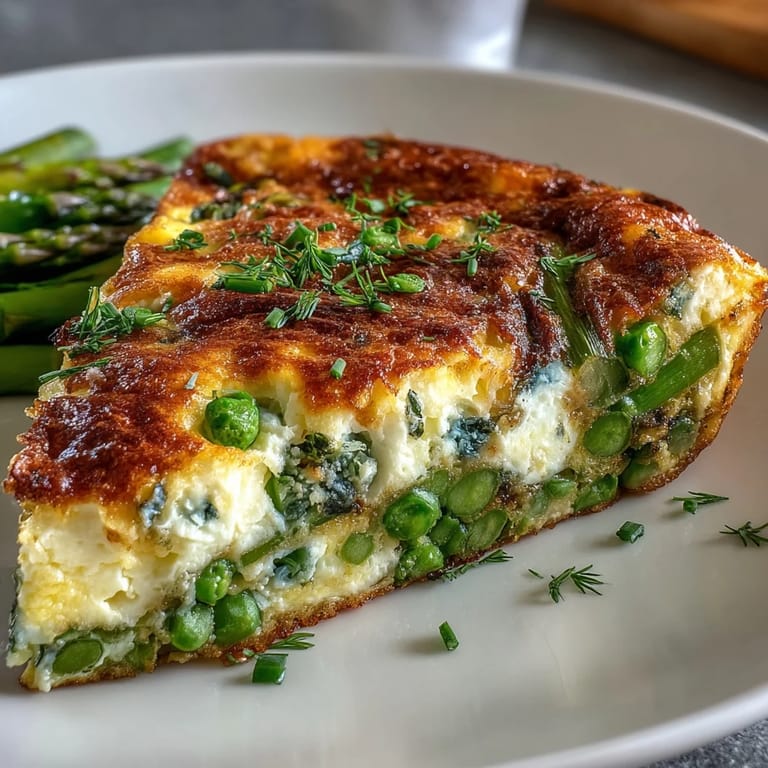
- Pull it out, pause for five minutes so everything settles, then cut into wedges and serve warm or at room temperature.
 Save to Pinterest
 I remember sharing cold frittata slices with my neighbor while we watched her toddler toddle between flowerpots. The leftover wedge felt like a treat, simple but filled with stories from the garden and kitchen alike.
Egg Texture Makes All the Difference
Whisking the eggs until they’re light introduces just enough air to keep the frittata fluffy rather than dense. I’ve forgotten this step once and regretted every rubbery bite.
Balancing Herbs and Cheese
Finding the right amount of herbs matters – too much overwhelms, too little gets lost – and goat cheese should be scattered so it doesn’t pool in one spot.
Serving and Storing Tips
Leftovers are surprisingly delicious, especially cold from the fridge or tucked into picnic baskets. Slice frittata before storing for quicker breakfasts or snacks.
- Line the storage container with parchment to prevent sticking.
- Let wedges cool completely before refrigerating.
- If reheating, cover loosely to avoid drying out.
 Save to Pinterest
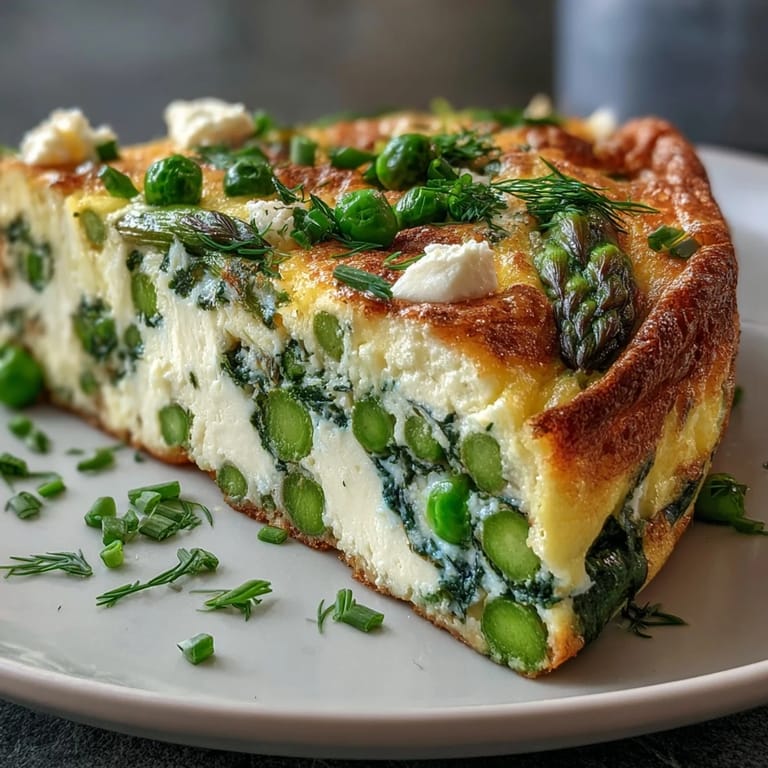
 Let this frittata usher in brighter mornings and easy gatherings – it’s as joyful to make as it is to eat. I hope each bite brings you a taste of spring and simple comfort.
Recipe Questions & Answers
- → What vegetables can I use besides asparagus and peas?
You can substitute or add spring vegetables like zucchini, fava beans, or fresh herbs to enhance flavor and color.
- → Can I make this dish dairy-free?
Yes! Use plant-based milk and omit or replace goat cheese with vegan cheese for a dairy-free option.
- → What is the best way to serve this frittata?
Enjoy it warm or at room temperature, sliced with a side salad and crusty bread for a complete meal.
- → How can I prevent the frittata from sticking?
Use an oven-safe nonstick skillet and ensure the butter is well melted before adding vegetables and eggs.
- → Can I prepare it in advance?
Yes, prepare ahead and store covered in the refrigerator. Serve chilled or gently reheated for best texture.
- → What type of cheese works best?
Goat cheese adds creaminess and tang, but feta or ricotta can be used as alternatives for different flavors.