 Save to Pinterest
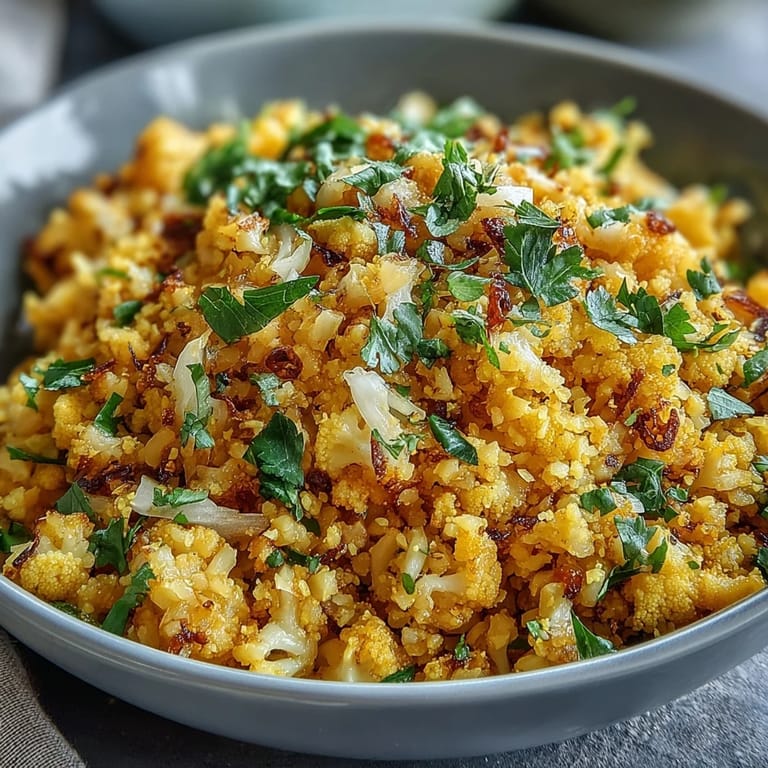
 My neighbor handed me a container of turmeric one afternoon while we were chatting over the fence, raving about how it had transformed her weeknight dinners. I was skeptical at first—golden powder seemed like an odd choice for cauliflower rice—but something about her enthusiasm made me try it that same evening. The kitchen filled with this warm, almost honeyed aroma that felt both exotic and strangely comforting. That first bite convinced me she was onto something real.
I made this for a potluck where everyone else brought heavy, complicated dishes, and somehow this modest golden bowl became the thing people kept coming back to. One guest asked for the recipe while still chewing, which felt like the highest compliment a home cook can receive. It was the moment I stopped thinking of it as just a healthy side and started seeing it as something with actual personality.
Ingredients
- 1 medium head cauliflower (about 600 g), cut into florets: The fresher your cauliflower, the brighter and less sulphury it will taste once riced—look for compact heads with tightly closed florets.
- 1 small onion, finely chopped: This becomes almost invisible when cooked, but it builds a savory foundation that makes everything else taste richer.
- 2 cloves garlic, minced: Mince it small so it distributes evenly and cooks quickly without burning in the hot spiced oil.
- 1 tablespoon olive oil or coconut oil: Coconut oil leans into the warming spices, while olive oil keeps it cleaner and brighter—pick whichever mood you're in.
- 1 teaspoon ground turmeric: This is the star, so use fresh turmeric if you can find it; older spices fade and won't give you that vibrant color or earthiness.
- 1/2 teaspoon ground cumin: Cumin echoes the warmth of turmeric and adds a subtle nuttiness that ties everything together.
- 1/4 teaspoon ground black pepper: A small amount sharpens the turmeric's flavor without overwhelming anything else.
- 1/2 teaspoon sea salt, or to taste: Taste as you go—cauliflower needs seasoning to really come alive.
- Pinch of red chili flakes (optional): I skip this sometimes and add it other times depending on what I'm serving it with, so keep it truly optional.
- 2 tablespoons chopped fresh cilantro or parsley: Fresh herbs at the end add brightness and prevent the whole dish from feeling too heavy.
- Juice of 1/2 lemon: The acid is crucial—it wakes up everything and prevents the turmeric from tasting flat.
Tired of Takeout? 🥡
Get 10 meals you can make faster than delivery arrives. Seriously.
One email. No spam. Unsubscribe anytime.
Instructions
- Pulse your cauliflower into rice:
- Cut the florets into roughly 2-inch pieces before pulsing in a food processor so you have more control. Work in batches if your processor is small, and pulse in short bursts rather than one long whir to avoid creating powder instead of grains.
- Build your flavor base:
- Heat the oil over medium heat and listen for it to shimmer before adding the onion—this gives you a head start on caramelization. Let the onion soften completely, which takes a bit longer than you'd think but rewards patience with sweetness.
- Toast your spices:
- After the garlic hits the pan, immediately add all your spices and stir constantly for about a minute. You'll know it's working when your kitchen smells like warmth itself.
- Cook the cauliflower rice:
- Stir the riced cauliflower into the spiced oil and work steadily to coat everything evenly, keeping the heat at medium. The cauliflower will release moisture and become tender in about 5 to 7 minutes—stop here rather than cooking further, or it gets mushy and defeated.
- Finish with brightness:
- Turn off the heat, squeeze the lemon juice over top, scatter the fresh herbs, and give everything a final toss. Taste and add more salt if needed—this is your moment to adjust.
 Save to Pinterest
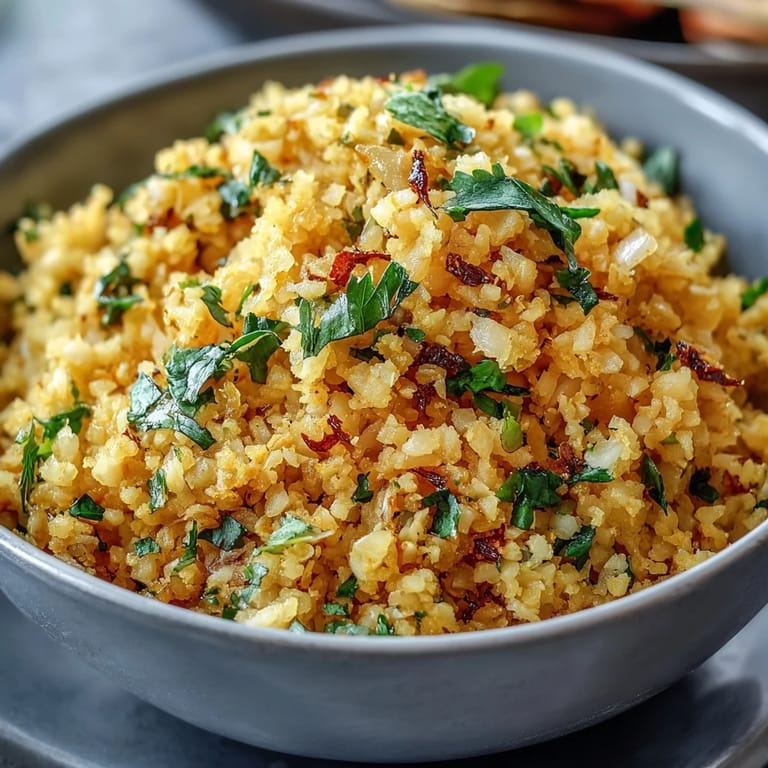
 My daughter, who normally refuses anything she deems "healthy," asked for seconds and then asked what made it taste "fancy" compared to regular rice. That's when I realized this wasn't just about ingredients—it was about paying enough attention that everything tastes intentional. That small moment made me understand why my neighbor had been so enthusiastic all along.
When to Serve This
This works beautifully under curries, alongside grilled fish or chicken, or as a bed for roasted vegetables. I've also found it makes a surprisingly hearty lunch when paired with a simple salad and some protein—it holds up well in the refrigerator for a few days if you keep it in an airtight container. The flavors actually mellow and meld overnight, which some people find even better the next day.
Making It Your Own
This is one of those dishes that welcomes additions without falling apart. I've stirred in peas, diced bell peppers, and fresh spinach depending on what's in my crisper drawer, and it only becomes more interesting. Sometimes I add a handful of toasted almonds or cashews just before serving for texture and depth, which transforms it from a simple side into something with more personality.
Storage and Make-Ahead Notes
You can make this up to three days ahead and reheat it gently in a skillet with a splash of water, though it tastes best served the same day. If you're prepping for the week, pulse your cauliflower in advance and store it in the refrigerator in a sealed container so the actual cooking takes only minutes. The spices, oil, and fresh elements come together so quickly that this is genuinely a meal-saver on nights when you need something wholesome without the effort.
- Store leftovers in an airtight glass container and reheat on the stovetop with a tiny splash of water to restore texture.
- You can prep the cauliflower rice days ahead, which makes the cooking part feel almost effortless.
- A squeeze of fresh lemon right before serving always improves a reheated batch.
 Save to Pinterest
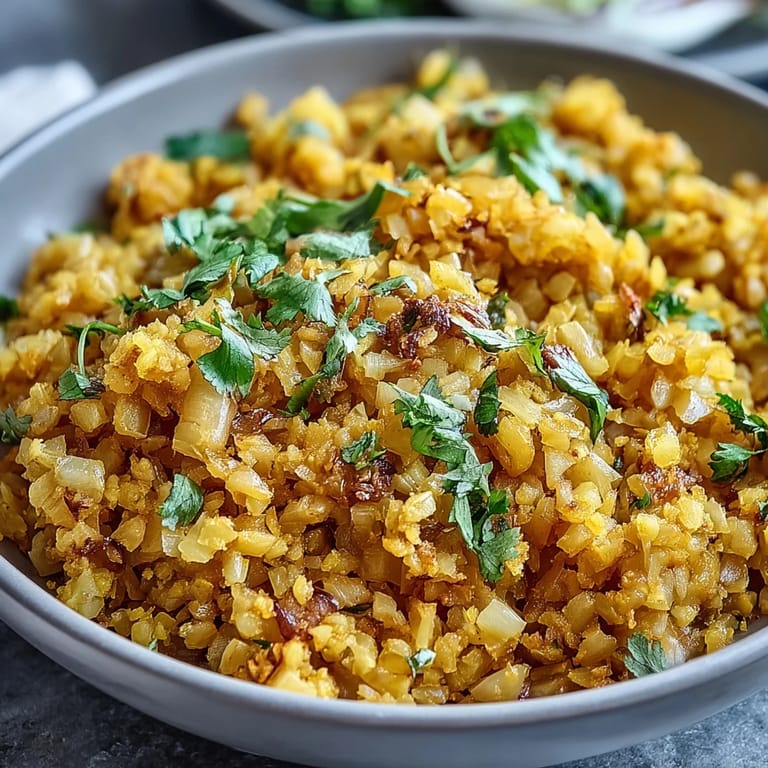
 This dish taught me that eating well doesn't require complexity, just attention and a few good seasonings. Make it once, and it becomes the kind of thing you'll find yourself reaching for on ordinary nights when you want something that tastes anything but ordinary.
Recipe Questions & Answers
- → Can I make this dish ahead of time?
Yes, you can prepare the riced cauliflower up to 2 days in advance and store it in an airtight container in the refrigerator. Cook it just before serving for the best texture, though leftovers reheat well in the skillet or microwave.
- → What vegetables can I add for more variety?
Fold in frozen green peas during the last 2 minutes of cooking, add diced bell pepper with the onions, or stir in fresh baby spinach until wilted. These additions boost color, nutrients, and texture without complicating the preparation.
- → Is a food processor necessary?
While a food processor creates the most consistent rice-like texture, you can use a box grater or hand-held chopper. Work carefully and in batches for even results. Pre-riced cauliflower from the grocery store also works perfectly.
- → How do I prevent the cauliflower from becoming mushy?
Avoid overcrowding the skillet and resist stirring too frequently. Cook over medium heat and check for tenderness after 5 minutes. The cauliflower should be tender but still retain some texture, similar to al dente grains.
- → Can I use fresh turmeric instead of ground?
Fresh turmeric works beautifully—grate 1 tablespoon and add it with the garlic. Note that fresh turmeric has a milder flavor than ground, so you may want to increase the amount slightly to achieve the same vibrant color and earthy taste.
- → What other garnishes work well?
Toasted slivered almonds or cashews add satisfying crunch, while a dollop of coconut yogurt creates creaminess. Fresh mint, sliced green onions, or pomegranate seeds also make beautiful and flavorful finishing touches.