 Save to Pinterest
 My neighbor showed up one evening with a ceramic bowl full of something golden and jewel-toned, still faintly warm. She'd been experimenting with what to do with a box of vegetables from her CSA, and this salad was the result. I ate it standing at the counter, fork in hand, marveling at how something so simple tasted so complete. By the time she left, I'd already written down the basic idea on the back of an envelope.
I started making this on Sunday afternoons when I needed something that felt nourishing without requiring much focus. The smell of roasting peppers and onions would fill the apartment, and by the time I fluffed the couscous, I'd feel settled. Once, I brought it to a potluck and someone asked if I'd ordered it from a restaurant. I didn't correct them right away.
Ingredients
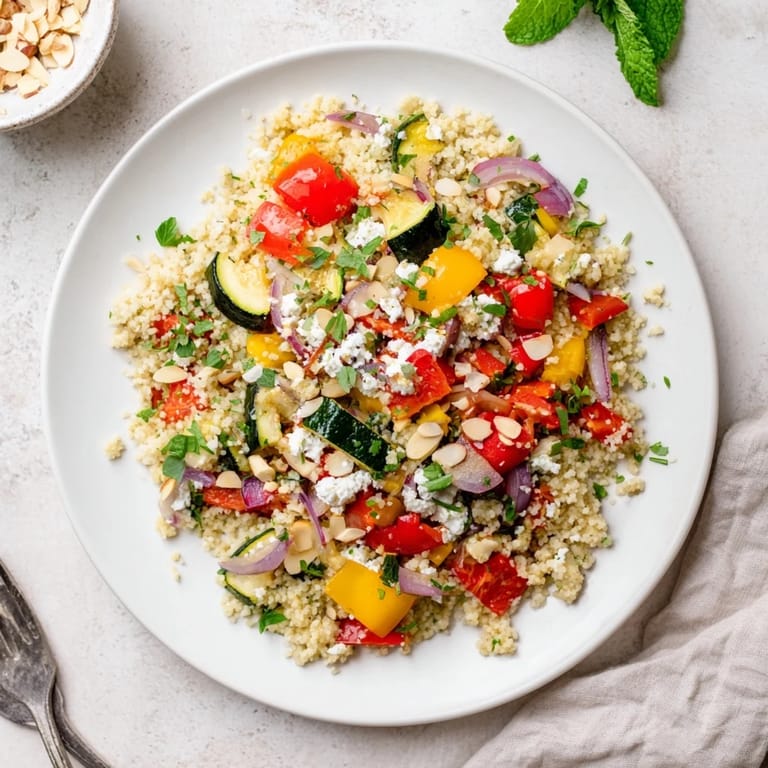
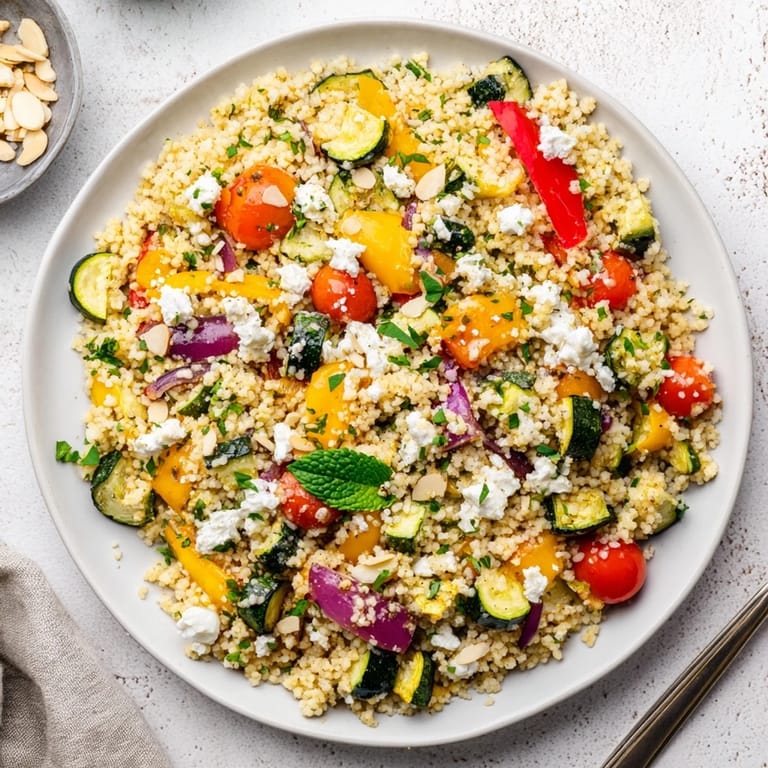
- Zucchini: Diced into even pieces so they roast uniformly, releasing moisture and turning golden at the edges without going mushy.
- Red and yellow bell peppers: Their natural sweetness intensifies in the oven, and using both colors makes the dish look alive on the plate.
- Red onion: Cut into wedges rather than thin slices so they hold their shape and develop a sweet, charred flavor.
- Cherry tomatoes: Halved so they collapse slightly and release their juices, adding little bursts of acidity throughout the salad.
- Olive oil (for roasting): Just enough to coat the vegetables and encourage caramelization without making them greasy.
- Salt and black pepper: Season the vegetables before roasting so the flavors penetrate as they cook.
- Couscous: Light and fluffy, it soaks up the dressing beautifully and provides a neutral base that lets the vegetables shine.
- Vegetable broth: Adds a subtle depth to the couscous that plain water cannot, though water works fine if that is what you have.
- Olive oil (for couscous): Stirred in before steaming to keep the grains separate and add a silky texture.
- Lemon juice and zest: Brightens everything with sharp, sunny acidity that cuts through the richness of the oil and feta.
- Extra virgin olive oil (for dressing): Use a good one here, it is the backbone of the dressing and you will taste the difference.
- Dijon mustard: Emulsifies the dressing and adds a subtle tang that rounds out the lemon.
- Garlic: Finely minced so it disperses evenly, adding a gentle bite without overwhelming the other flavors.
- Honey or maple syrup: Just a touch to balance the acidity and bring all the flavors into harmony.
- Fresh parsley: Chopped and stirred in at the end for a grassy, bright note that feels essential.
- Fresh mint: Optional but wonderful, it adds a cool contrast that makes the salad feel more layered.
- Feta cheese: Crumbled on top for creamy, salty pops that melt slightly into the warm couscous.
- Toasted pine nuts or almonds: A crunchy finishing touch that adds richness and makes each bite more interesting.
Tired of Takeout? 🥡
Get 10 meals you can make faster than delivery arrives. Seriously.
One email. No spam. Unsubscribe anytime.
Instructions
- Preheat and prep:
- Set your oven to 425°F and line a baking sheet with parchment paper so nothing sticks. This high heat will give the vegetables those caramelized edges that make the dish.
- Roast the vegetables:
- Toss the zucchini, peppers, onion, and tomatoes with olive oil, salt, and pepper, then spread them out in a single layer. Roast for 20 to 25 minutes, stirring halfway through so everything cooks evenly and develops color.
- Cook the couscous:
- Bring the vegetable broth to a boil, stir in the couscous, olive oil, and salt, then cover and remove from heat. Let it steam undisturbed for 5 minutes, then fluff it gently with a fork to separate the grains.
- Make the dressing:
- Whisk together the lemon juice, zest, olive oil, mustard, garlic, honey, salt, and pepper until smooth and emulsified. Taste it and adjust the balance if needed.
- Combine everything:
- In a large bowl, toss the couscous with the roasted vegetables, parsley, and mint if using. Pour the dressing over and mix gently until everything is coated.
- Finish and serve:
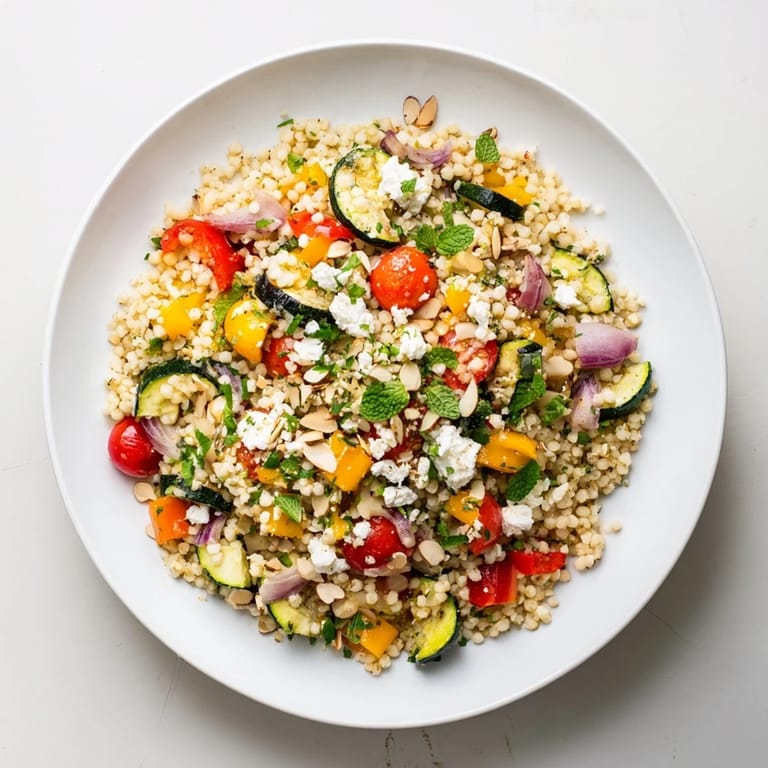
- Scatter the feta and toasted nuts over the top just before serving. Serve it warm, or let it sit at room temperature where the flavors will continue to meld.
 Save to Pinterest
 One summer I made this for a small dinner on the patio, and we ate it as the sun went down, passing the bowl around and refilling our plates. Someone said it tasted like vacation, and I realized that is exactly what I loved about it. It felt effortless and bright, the kind of food that makes you linger at the table a little longer.
Serving Suggestions
This salad works beautifully on its own for a light lunch, but it also pairs well with grilled chicken, lamb kebabs, or a piece of seared fish. I've served it alongside roasted salmon and the lemony dressing tied everything together. If you want to make it heartier, stir in a can of drained chickpeas or add slices of grilled halloumi on top. It is also lovely as part of a mezze spread with hummus, olives, and warm pita.
Storage and Make Ahead Tips
You can roast the vegetables and cook the couscous a day ahead, storing them separately in the fridge. When you are ready to serve, bring them to room temperature or warm them gently, then toss with the dressing and fresh herbs. The salad tastes best the day it is made, but leftovers will keep for up to two days in an airtight container. The couscous will absorb more dressing as it sits, so you may want to drizzle a little extra olive oil and lemon juice over it before serving again. Add the feta and nuts just before eating so they stay fresh and crunchy.
Variations and Substitutions
If you want to make this vegan, simply leave out the feta or swap it for a plant based cheese that crumbles well. You can replace the couscous with quinoa or bulgur for a different texture, just adjust the cooking time and liquid accordingly. I have also used eggplant, cauliflower, or asparagus when I had them on hand, and they roasted just as beautifully. For a nut free version, replace the pine nuts with toasted sunflower seeds or pumpkin seeds.
- Try adding a handful of arugula or spinach for extra greens and a peppery bite.
- A squeeze of pomegranate molasses in the dressing adds a sweet tart depth that feels luxurious.
- If you like heat, stir in a pinch of red pepper flakes or a finely chopped chili pepper with the garlic.
 Save to Pinterest
 This is the kind of recipe that makes you feel capable in the kitchen without asking too much of you. I hope it becomes one of those dishes you turn to when you want something colorful, satisfying, and just a little bit special.
Recipe Questions & Answers
- → Can I prepare this ahead of time?
Yes, you can prepare the components in advance. Cook the couscous and roast the vegetables up to 2 days ahead, storing them separately in airtight containers. Make the dressing and combine everything just before serving to keep the couscous fluffy and vegetables fresh.
- → What vegetables work best for roasting?
Zucchini, bell peppers, cherry tomatoes, and red onion are ideal for roasting. You can also substitute or add eggplant, asparagus, broccoli, or carrots. Cut vegetables into similar-sized pieces for even cooking at 425°F.
- → How do I make this vegan?
Omit the feta cheese or replace it with a plant-based alternative like cashew cream or vegan cheese. Ensure your couscous and vegetable broth are certified vegan. All other ingredients are naturally plant-based.
- → Can I use different grains instead of couscous?
Absolutely. Quinoa, bulgur, farro, or brown rice work well. Adjust cooking times and liquid ratios according to package directions. The lemon dressing complements any grain beautifully.
- → What proteins pair well with this salad?
Grilled chicken, roasted fish, or fresh halloumi add excellent protein. Chickpeas or white beans are great vegetarian options. You can also serve it alongside grilled shrimp or lamb for Mediterranean variety.
- → How long does this keep in the refrigerator?
Leftovers store well for up to 2 days in an airtight container. Keep the dressing separate if storing longer. Let chilled salad come to room temperature for 15 minutes before serving, or reheat gently if preferred.